Manus Alternatives: 5 AI Agent Tools for Ops Teams (2026)
Summary
Manus alternatives worth testing in 2026 if you run an ops team, not just a solo research workflow: Genspark, Skywork, Suna, Flowith, and ChatGPT Agent mode. We compare price, task range, self-hosting control, team sharing, and output format against Manus's own browser-and-terminal agent loop. Genspark comes closest as a like-for-like swap. Skywork wins when the deliverable itself, the deck or report, matters more than the automation. Suna is the open-source route for teams that want to audit the agent. Pick based on your actual task, not the demo.
The Manus alternatives worth testing in 2026, if you run an ops team and not a solo research workflow, are Genspark, Skywork, Suna, Flowith, and ChatGPT Agent mode. Manus still does one thing well: hand it a task, get back a finished file. But Genspark covers more ground per login, Skywork ships better decks and reports, and Suna gives engineering-adjacent teams full control. Pick Genspark as the default swap, Skywork if your Manus use case was always the deliverable, not the automation.
Briefing, 30 seconds: Manus is an agent-first product: a real browser, terminal, and file system behind every prompt. It works. The catch for an ops team is that Manus is built for one operator running one task at a time, not a team sharing a playbook. Below are five tools GTM, sales, and CS ops leads actually swap in when Manus stops fitting the team, not the individual.
Why ops teams look past Manus
Manus's Wide Research mode fans a task across parallel sub-agents, and it genuinely ships finished artifacts, sites, decks, documents, instead of chat text. That is real. What it does not do well: transparent per-seat pricing (credit math is opaque until you run the job), and anything resembling a shared team playbook. An ops lead running deal research for a 10-person GTM team hits both walls inside the first month.
Where task range decides the switch
Genspark is the closest like-for-like swap: browsing, phone calls, slides, docs, image, video, and code from one prompt, plus Office-suite plugins (Google Workspace, PowerPoint, Excel, Word) that cut export friction Manus doesn't address. If your team's complaint about Manus was "it does research well but I still export everything by hand," Genspark is the fix to test first.
Where the deliverable decides the switch
Skywork isn't trying to be a general browser-controlling agent. It's built around 7 specialized agents (docs, slides, sheets, sites, video, podcasts) with a Deep Research slides mode that cites sources from Google Scholar and Wikipedia directly in the deck. For a CS ops lead whose actual Manus use case was "generate the QBR deck with real data behind it," Skywork's narrower focus produces a more polished output than Manus's general-purpose loop, at roughly $12-16/month against Manus's opaque credit tiers.
Where control and self-hosting decide the switch
Suna, built by Kortix, is open-source and self-hostable, roughly 20k GitHub stars, and it's the tool people cite as the closest open answer to Manus's architecture: browser, shell, files, all inspectable. No mandatory subscription, but you own uptime, patching, and whichever LLM API costs you connect. This is the pick for engineering-adjacent ops teams that need to audit exactly what the agent does with company data, not the pick for a lean 3-person ops team without infra support.
Where price and team fit decide the switch
Flowith undercuts everyone on paid entry ($19.90/month for 20,000 credits and up to 50 concurrent tasks) and bundles access to 40+ underlying models, but G2 lists only 2 reviews at time of writing, too thin a sample to lean on for a team rollout. ChatGPT Agent mode is the zero-new-tool option: if the team already runs ChatGPT Plus, Agent mode adds autonomous browsing and task execution with no new vendor to onboard, though it's usage-capped even on Plus and less battle-tested for multi-app workflows than either Manus or Genspark.
How we compared them
We read each product's own pricing and feature pages (checked July 2026), cross-referenced task-range claims against independent write-ups and G2/Capterra listings where available, and mapped every criterion back to a real ops workflow: deal research, QBR decks, CRM enrichment, or a shared team command. Screenshots are from each product's live homepage, not marketing renders. Custom scores weigh task range, published pricing transparency, and switching cost equally; we did not test raw task-completion accuracy head-to-head across all five in this pass; that's a follow-up worth running before a team-wide rollout.
Your next command
Test Genspark first if Manus's core job for your team was "one login, many outputs." Test Skywork first if the Manus job that actually mattered was the deck or report at the end. Route the CTA into whichever product's card matches the workflow you just described, and set a 2-week trial window before committing a full team migration.
At-a-glance
| Genspark | Skywork | Suna | Flowith | ChatGPT | |
|---|---|---|---|---|---|
| Price | Free daily credits; paid tiers ~$19.99-$200/mo by concurrency | Free tier; Pro ~$12-16/mo, annual discount available | Free open-source core; you pay your own compute + LLM API keys | Free Starter; Pro $19.90/mo, Ultimate $49.90/mo, Infinite $499.90/mo | Free tier; Plus $20/mo; Pro $200/mo for heavier Agent mode use |
| Task range | Browsing, phone calls, slides/docs/image/video, code, from one prompt | 7 specialized agents: docs, slides, sheets, sites, video, podcasts, deep research | Browser, shell, files for research/coding/web tasks; fully inspectable loop | Oracle + Neo agents: research, decks, simple sites on a branching canvas | Agent mode: virtual browser/terminal for booking research, forms, data gathering |
| Control & hosting | Closed hosted, no-code Super Agent, limited low-level control | Closed hosted workspace; behavior fixed per specialized agent | Fully open-source, self-hostable, auditable and forkable agent loop | Closed hosted; 40+ underlying models selectable per task | Closed hosted; model and agent behavior set by OpenAI |
| Team sharing | Account-based; no dedicated team playbook or sharing layer | Individual-first workspace; sharing via exported files, not playbooks | Self-hosted deploy can be shared org-wide; access control is yours to build | Individual tiers; Infinite adds a commercial license, not team roles | Business/Enterprise seats with admin controls; no per-workflow playbook sharing |
| Deliverable output | Slides, sheets, docs, images, video, executable code exports | Decks/docs/sites with Deep Research citing Scholar and Wikipedia sources | Code, research reports, and files written to your own infrastructure | Decks, docs, simple websites built and iterated on a branching canvas | Text answers plus files/spreadsheets Agent mode assembles mid-task |
| Setup effort | Account creation only, no infra | Account creation only, no infra | Requires hosting + your own LLM API keys, or Kortix's managed plan | Account creation only, no infra | Already on ChatGPT Plus means zero new setup |
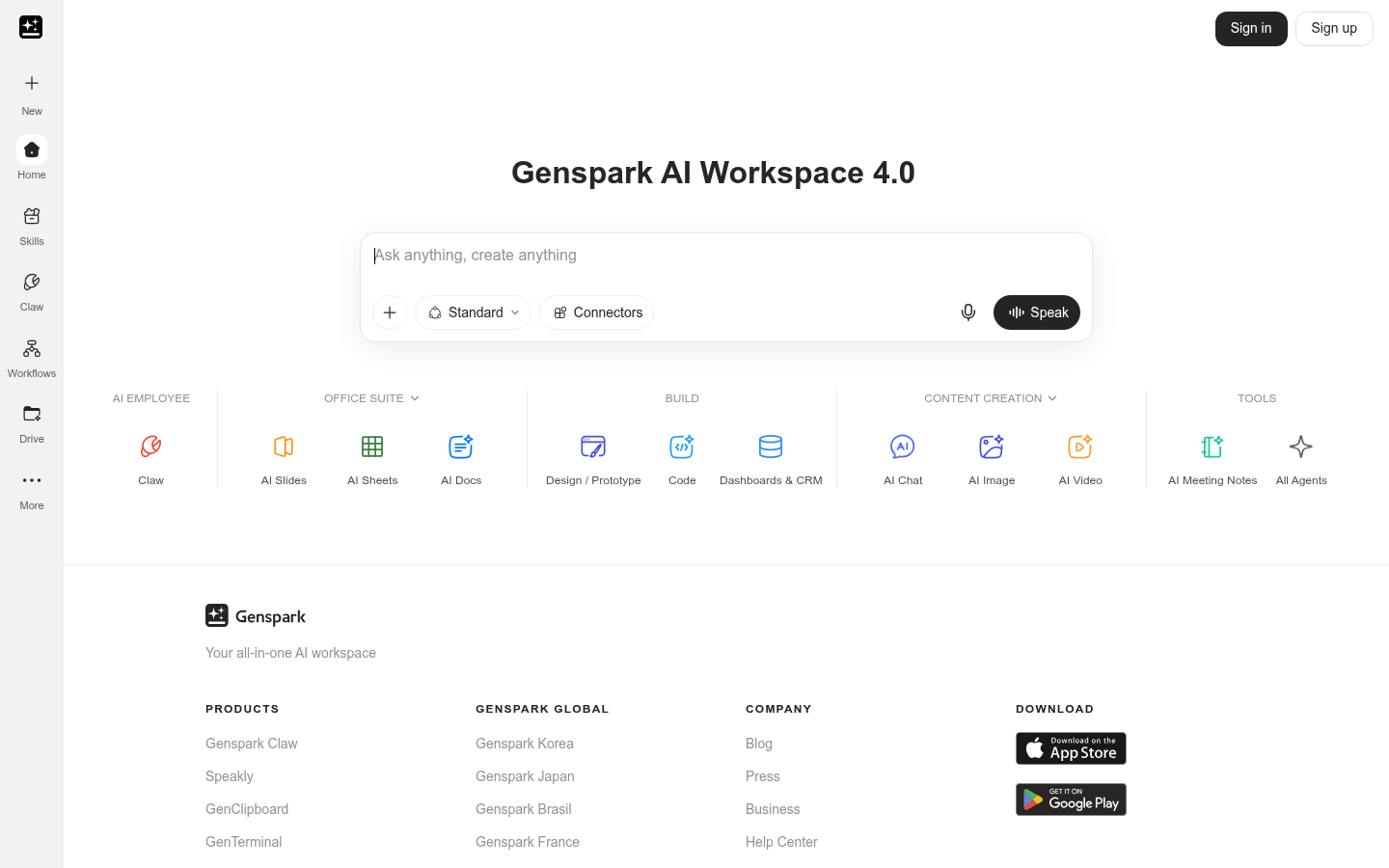
Genspark
- Broadest task range of the group: slides, sheets, docs, image, video, code, and calls from one login
- No-code Super Agent needs less manual setup than a builder-style automation tool
- Office-suite plugins for Google Workspace, PowerPoint, Excel, and Word cut export friction
- Pricing tiers and credit costs stay hidden until you create an account
- Broad feature surface means slides or docs alone can trail a specialist tool in polish
Closest like-for-like swap for Manus: same do-everything ambition, wider task menu.
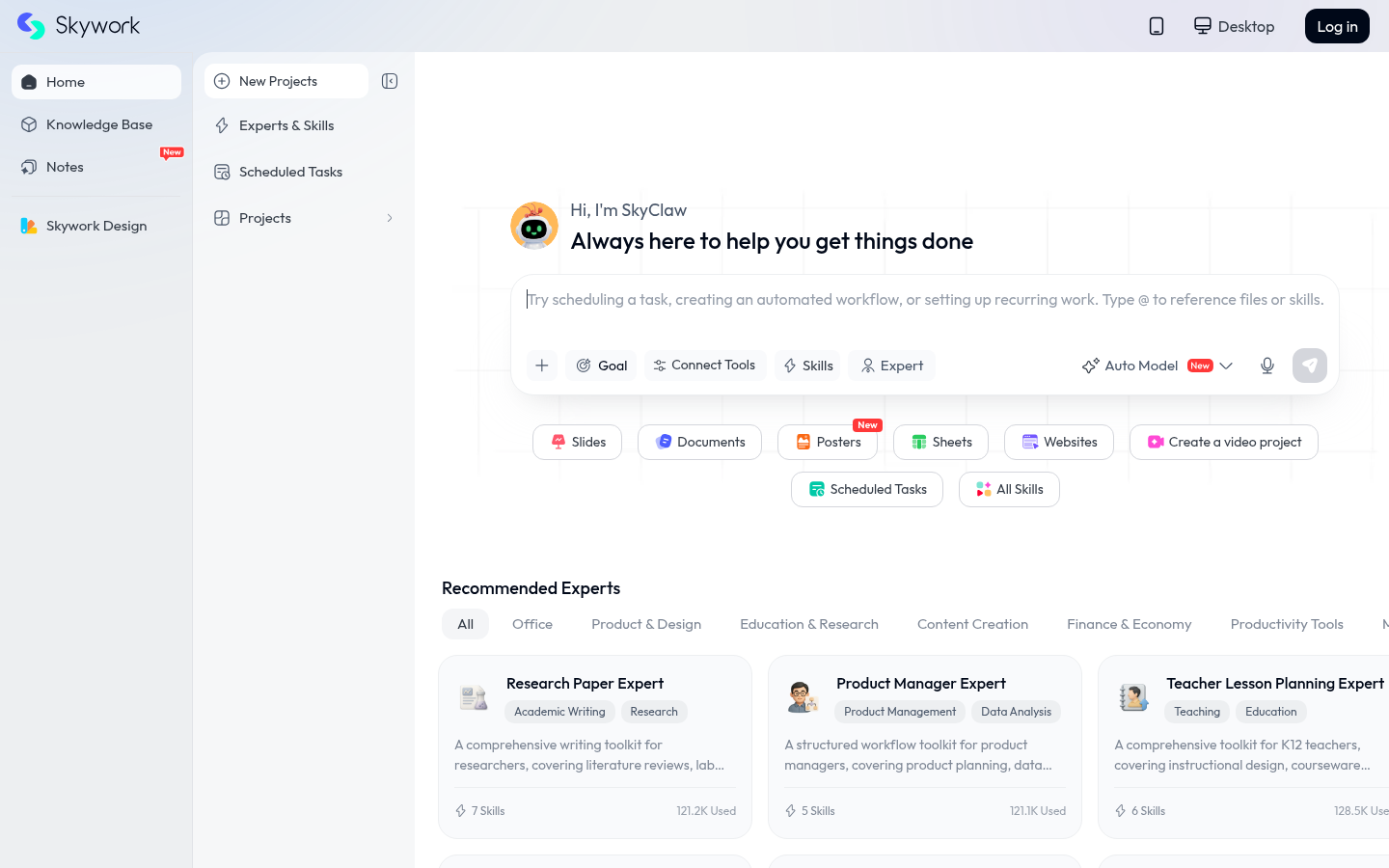
Skywork
- Deep Research slides mode cites sources from Google Scholar and Wikipedia in the deck itself
- Layer Splitting keeps every design element in a generated file individually editable
- Pro tier runs about $12-16/month, cheaper than most agent-first competitors here
- Built around document, slide, and image agents, not general browser task automation
- Less suited to multi-app research workflows than Manus's Wide Research mode
Best pick when the deliverable itself matters more than the automation loop.
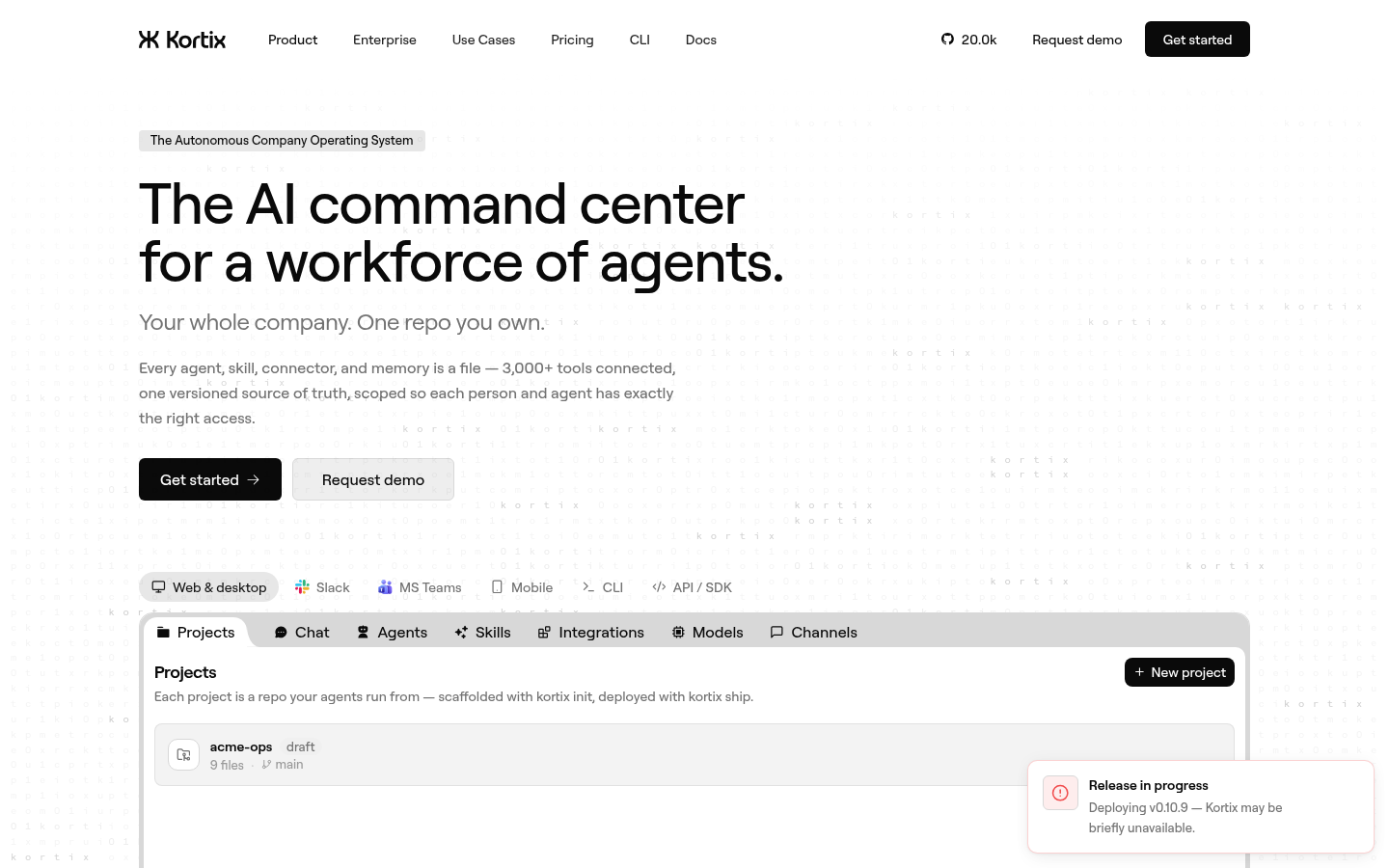
Suna
- Fully open-source and self-hostable, so you can inspect or fork the entire agent loop
- No mandatory subscription: cost scales with your own infrastructure and model choice
- Active project with roughly 20,000 GitHub stars and frequent releases
- Self-hosting means you own uptime, security patching, and API costs directly
- Setup and prompt-engineering effort is higher than a polished hosted product
The open-source route if your team can trade setup time for full control.

Flowith
- Cheapest paid entry point among autonomous-agent tools in this group at $19.90/month
- Access to 40+ underlying models bundled into a single subscription
- Branching canvas keeps parallel research and drafting threads visually separated
- G2 lists only 2 reviews at time of writing, too small a sample to trust as a signal
- Some reviewers report the canvas loses your place in longer working sessions
Reasonable budget option, but the thin review base means test it before a team rollout.
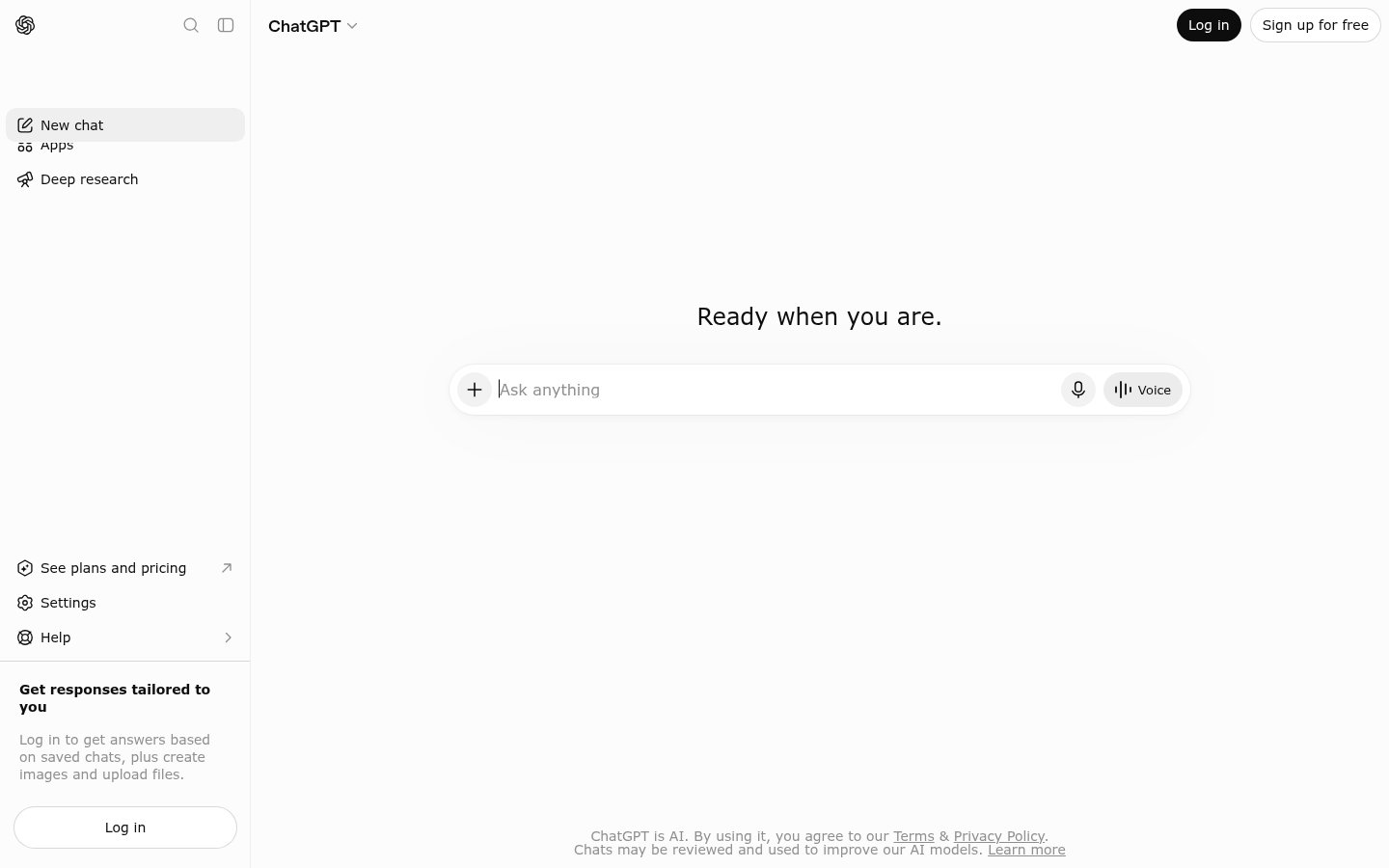
ChatGPT
- Near-zero switching cost for teams already paying for ChatGPT Plus
- Agent mode benefits from the same frontier model updates as regular chat
- Transparent, stable published pricing since 2023, unlike credit-based competitors
- Agent mode is usage-capped even on Plus, pushing heavy workflows to the $200/month Pro tier
- Browser automation is newer and less battle-tested for multi-app workflows than Manus
The zero-new-tool option, not the most capable one for daily unattended agent work.
Verdict
Genspark is the default swap for most ops teams: it matches Manus's do-everything ambition with a wider task menu and Office-suite exports Manus doesn't offer. Skywork wins when the deliverable itself, the deck, the report, is the whole point. Suna is the right call only if your team can own self-hosting. Flowith and ChatGPT Agent mode are the budget and zero-migration options, respectively, both with real tradeoffs attached.
How we tested
We read each product's own pricing and feature pages between July 10 and July 16, 2026, and cross-checked task-range and review-count claims against independent write-ups plus public G2/Capterra listings where a product had enough reviews to show one. Each screenshot was captured live via Firecrawl at 1440x900 from the product's own homepage, not a marketing render or press kit image. Custom scores weigh three factors equally: breadth of task range, transparency of published pricing, and switching cost from an existing ops stack. We did not run a head-to-head task-completion benchmark across all five products in this pass; that's flagged as a follow-up before recommending a full team migration on accuracy grounds alone.